ServicesCalcium Removal and Tile Cleaning
Calcium Removal and Tile Cleaning in Gold Canyon
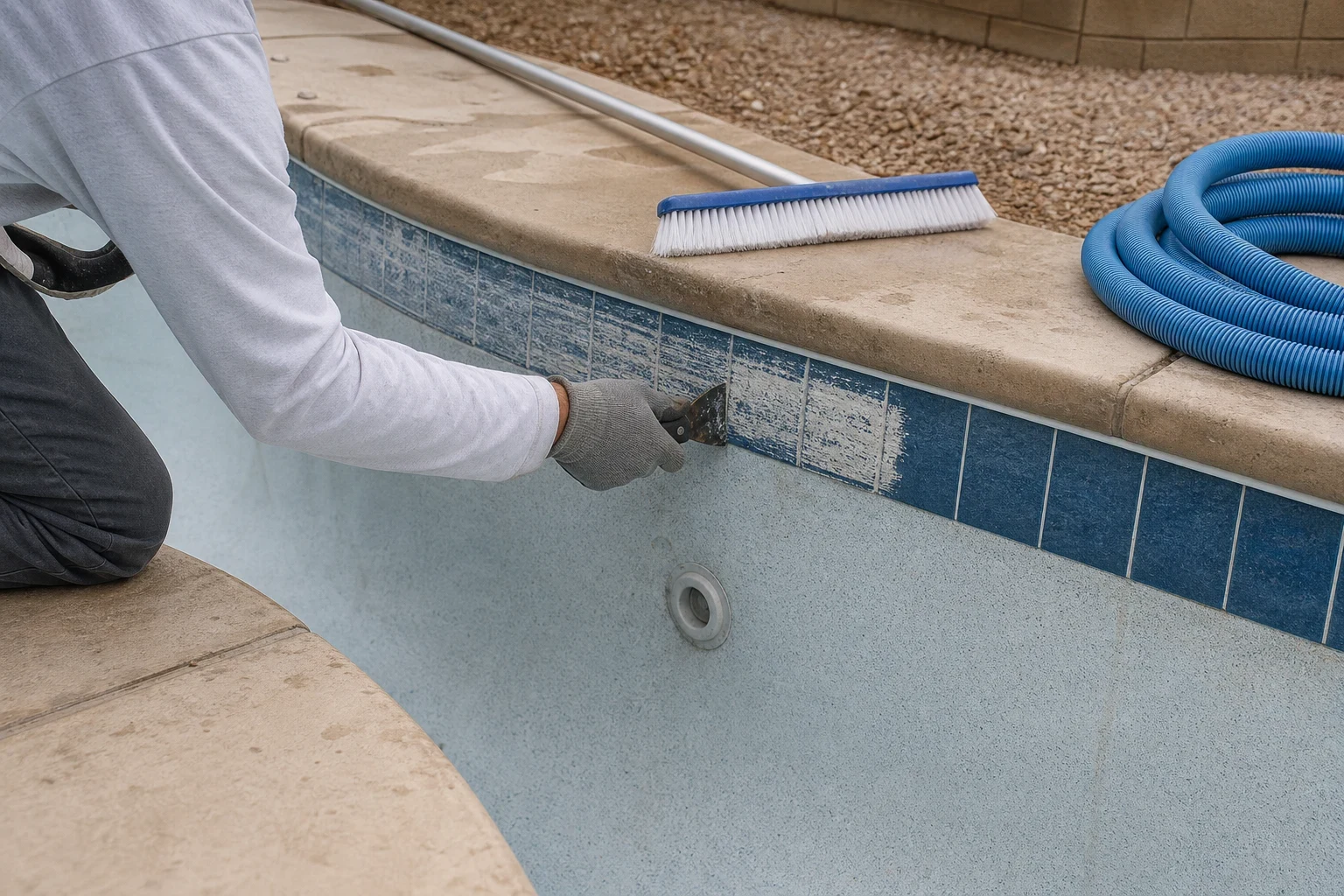
That chalky band at your waterline is mineral scale, and it only gets harder with time. We identify what kind it is, choose a method your tile can take, and leave the glaze clear and the grout lines intact.
What calcium removal involves
Pool water carries dissolved calcium. As it evaporates, the minerals stay behind and bond to the tile right at the water's edge. Fresh deposits are soft and white. Left through a few summers, they harden into a gray, stony crust that ordinary brushing will not touch.
Not all scale is the same. Calcium carbonate is flaky and responds to gentle acid and hand tools. Calcium silicate is dense and glassy, and usually needs soft media blasting to remove without harming the tile beneath. We test a small area first so the method matches both the deposit and the surface.
The best timing is before the heat sets in. Clearing scale in spring means the long evaporation months start on clean tile, and a fall cleaning after monsoon rains takes off what summer left behind.
What the work includes
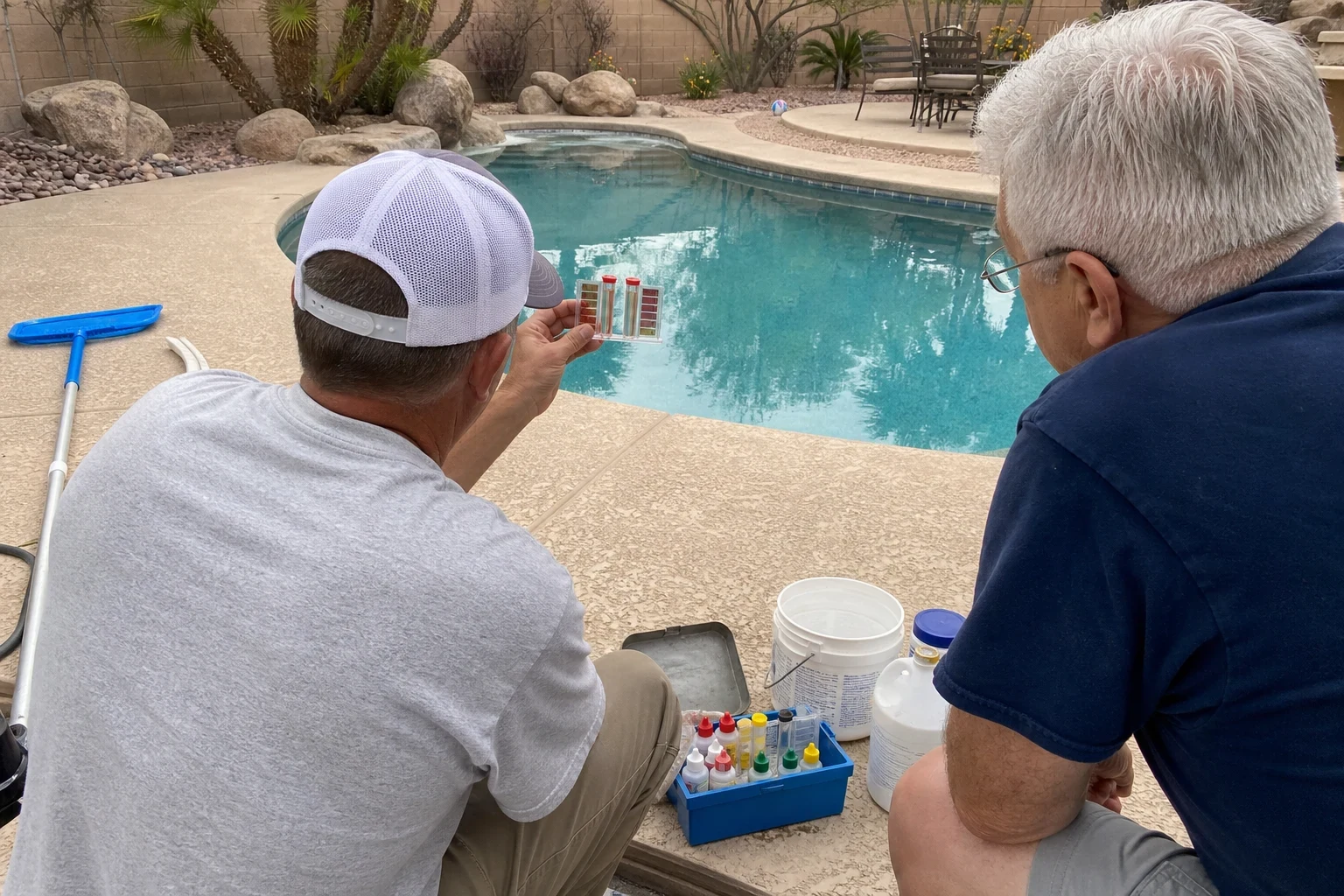
Scale and tile assessment
We look at the deposit's color, thickness and hardness, and at the tile itself. Glazed porcelain, glass mosaic and natural stone each tolerate different tools, and we tell you which you have.
Lowering the water line
Most jobs need the water dropped several inches below the tile band so we can work on a dry surface. We lower only what the job calls for, not a full drain.
Hand removal or soft media blasting
Light carbonate scale comes off with mild acid and nonmetal scrapers. Heavy silicate scale gets fine media blasting at controlled pressure, which breaks the bond without etching the glaze.
Grout and edge detailing
We clean the grout lines and the coping edge where scale tends to wedge in. If we find loose tile or failing grout, we photograph it and tell you.
Refill and rebalance
We bring the water back up and adjust calcium hardness, pH and alkalinity so the water is less inclined to deposit scale again.
Signs your tile needs attention
- A white ring that won't brush off
- If the band at the waterline stays put after scrubbing, the minerals have fused to the tile surface and need more than a brush.
- Gray, rough crust
- A hard, sandpaper texture usually means calcium silicate. It takes more care to remove, and waiting makes it thicker.
- Dull or cloudy glaze
- Tile that looked glossy when installed but now looks matte often has a thin, even mineral film across it.
- Scale climbing up the tile
- When deposits reach well above the normal water level, the pool has gone through repeated evaporation and top-off cycles without the hardness being managed.
- Crusty return fittings and lights
- White buildup on jets, light rings and step edges usually means the waterline is in the same condition.
How the day runs
- 1
Test patch and plan
We clean a small section to confirm which method lifts the scale cleanly and what the tile looks like underneath. You see the result before we commit to the full band.
- 2
Prepare the area
We lower the water, protect the decking near our setup, and shut down equipment that could draw in debris.
- 3
Remove the scale
We work section by section around the pool, checking the glaze as we go. Blasting media and residue are collected rather than left in the water.
- 4
Rinse, refill and balance
The tile is rinsed, the water returned to level, and the chemistry adjusted. We walk the waterline with you before we leave.
What moves the price
Calcium removal is priced by the job once we've seen the pool. The type of scale and the length of the tile band make most of the difference. We give you a clear quote by phone and confirm it on site before any work starts.
- Type and thickness of scale
- Soft carbonate deposits clean up quickly by hand. Thick silicate crust takes media blasting and more time per foot.
- Length of the tile line
- A larger pool, a spa with its own tile band, or a raised wall with tile all add surface to clean.
- Tile material
- Glass mosaic and natural stone need slower, gentler work than standard glazed porcelain.
- Water to lower and replace
- How far the water drops, and the chemicals needed to rebalance after refilling, factor into the total.
Questions about calcium removal
- Will this scratch my tile?
- Not when the method fits the tile. We avoid metal tools and coarse pumice on glazed and glass surfaces, and we run a test patch first. Tile that is already etched or crazed will still show that wear once the scale is gone, and we'll point it out beforehand.
- Do you have to drain the whole pool?
- Usually not. We lower the water just below the tile band. If the plaster also needs work, a pool drain and refill paired with an acid wash may make more sense, and we'll explain the difference.
- How long does the tile stay clean?
- That depends mostly on your water chemistry and how often the pool is topped off. Keeping calcium hardness and pH in range slows new buildup considerably. Weekly pool cleaning, with chemicals included in the monthly price, keeps a close eye on those levels.
- When is the best time of year to do this?
- Spring is ideal because it clears the tile before months of heavy evaporation. Fall works well too, after summer and monsoon season have left their mark.
- Is the pool usable the same day?
- Most pools can be swimmable once refilled and the chemistry is back in range. We'll tell you when it's ready before we leave.
Start the season with clean tile
Tell us about your pool and the buildup you're seeing. We'll explain what's likely involved and give you a free quote over the phone.