ServicesEquipment Installation
Pool Equipment Installation in Gold Canyon
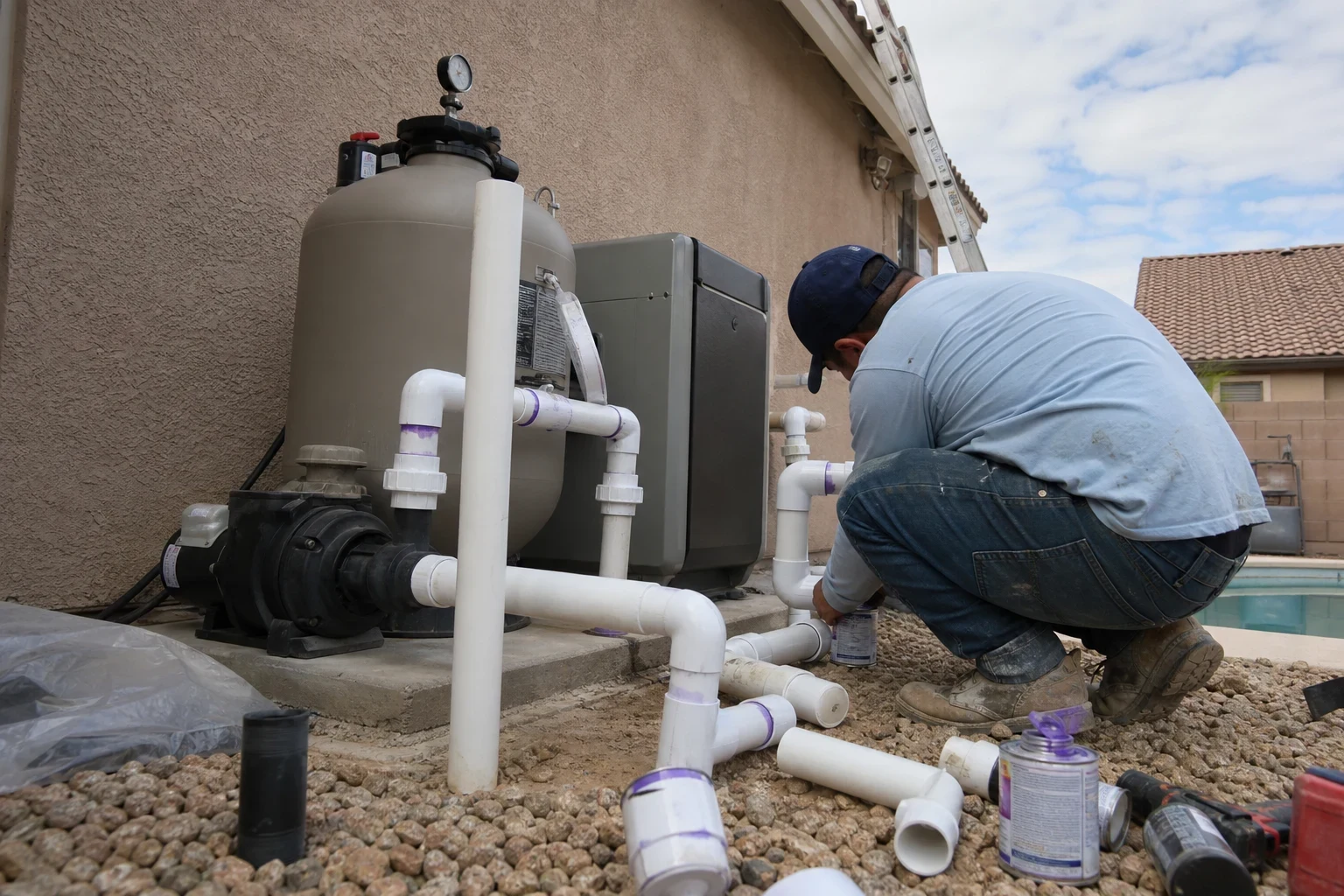
We install pumps, filters, heaters, salt systems and automation that fit your pool's size and plumbing. We plan the work around the season ahead, so new equipment is in, primed and running smoothly before summer heat or winter mornings put it to the test.
Equipment Chosen for Your Pool, Not the Catalog
Every pool has a working system on its equipment pad: a pump to move water, a filter to clean it, and often a heater, a salt cell or a booster pump for the cleaner. When one of those parts is worn out, undersized or costing more to run than it should, replacing it properly matters as much as the part you choose.
We start with the numbers. Pool volume, pipe size, the length of the plumbing run and the filter's rated flow tell us what the pump really needs to do. A pump that is too strong for its filter wears both out early. One that is too weak leaves corners of the pool cloudy by August.
Timing is the other half. Installing in spring or fall gives the new equipment a quiet stretch to settle in, and gives you time to learn the settings before the pool is working hardest.
What an Installation Includes
Variable-speed pumps
We replace single-speed pumps with variable-speed models that run long and slow for most of the day. They are quieter, gentler on the filter and usually far cheaper to run through a long summer.
Filter replacement
Cartridge, DE or sand, matched to your pump's flow and how much you want to handle between cleanings. We explain the tradeoffs plainly, including how each one copes with dust after a storm.
Heaters and heat pumps
Gas heaters warm a pool quickly for weekend use. Heat pumps cost less to run and suit owners who want the season stretched into spring and fall. We help you choose based on how you actually swim.
Salt chlorine generators
We plumb and wire the cell, set the output to your pool's volume, and show you how to check it. Hard water scales salt cells, so we cover how often yours should be inspected.
Plumbing and valves
New unions, check valves and diverter valves where the old ones are cracked or brittle. PVC left in strong sun for years turns chalky, and we replace it rather than glue onto it.
Automation and controls
Timers and app-based controllers that run the pump, heater and lights on a schedule you set once and adjust by season.
Signs Your Equipment Is Due for Replacement
- A pump that screams or hums
- Grinding or a loud whine usually means worn motor bearings. A hum with no water moving often points to a failed capacitor or a seized motor.
- Water that never quite clears
- If the chemistry is right and the pool still looks dull, the filter or pump may no longer be moving enough water through the system.
- Rising power bills
- An older single-speed pump running eight or more hours a day can be one of the largest electrical loads at your home.
- Leaks and cracked housings
- Drips at the pump lid, a weeping filter tank or a heater that rusts at the base all get worse under summer pressure and heat.
- A heater that won't fire
- Repeated error codes or ignition failures on an older heater often cost more to chase than a replacement. Our Pool Repair page covers the cases where a fix makes more sense.
How Installation Day Runs
- 1
A free quote by phone
Tell us what you have and what is going wrong. We talk through options and arrange a look at the equipment pad if we need to see the plumbing or the electrical.
- 2
A written plan
You get the recommended equipment, the reasons for it and the line items in writing. If a permit or electrical upgrade is involved, we say so before any work is scheduled.
- 3
Careful removal and fitting
We shut off power at the breaker, drain the lines, remove the old equipment and set the new pieces level on the pad. Joints are cut clean and glued with proper primer so they hold through years of sun.
- 4
Startup and handover
We prime the pump, check for leaks under full pressure, set run schedules and walk you through the controls. Old equipment and packaging leave with us.
What Shapes the Cost
Equipment prices vary widely by brand and model, but the installation around it is where most quotes differ. We price what your pad actually needs and list it line by line. Nothing gets added once the work starts without your say.
- The equipment itself
- A variable-speed pump, a heat pump or a full automation system each sits at a different level. We offer choices across a range and explain what the extra money buys.
- Plumbing changes
- Swapping like for like is straightforward. Moving to a different filter type, adding a heater or upsizing pipe adds fittings, valves and labor.
- Electrical and gas work
- New circuits, a bonding correction or a gas line for a heater can add cost and may require a permit and inspection.
- Pad condition and access
- A cramped side yard, a cracked pad or equipment buried under years of patches takes longer to work on safely.
Equipment Installation Questions
- Should I repair my pump or replace it?
- If the motor is young and the problem is a seal or capacitor, repair is usually the sensible choice. If it is an older single-speed pump with worn bearings, replacing it with a variable-speed model often pays back in lower power bills. We give you a straight answer either way.
- When is the best time of year to replace equipment?
- Spring and fall are ideal. Equipment goes in before it is needed, you avoid the summer rush, and we have time to fine-tune flow and run times. If something fails in July, we still install it, but planning ahead gives you more choice.
- How long does an installation take?
- A pump or filter swap is usually done in a single visit. A heater, salt system or full pad rebuild can take longer, especially if gas, electrical or permit work is involved. We give you a realistic timeline in the written plan.
- Will I need to drain the pool?
- No. Equipment installation happens on the pad, and the pool stays full. You may lose filtration for a few hours while we work, and we restart and balance everything before we leave.
- Do you install equipment I bought myself?
- Ask us when you call. We will check that it suits your pool's volume and plumbing before installing it, because a mismatched pump and filter cause more trouble than they save.
Get New Equipment in Before It's Needed
Tell us what is on your equipment pad and how your pool has been running. We will recommend what fits, explain why and schedule the work around the season ahead.