ServicesPool Drain and Refill
Pool Drain and Refill in Gold Canyon
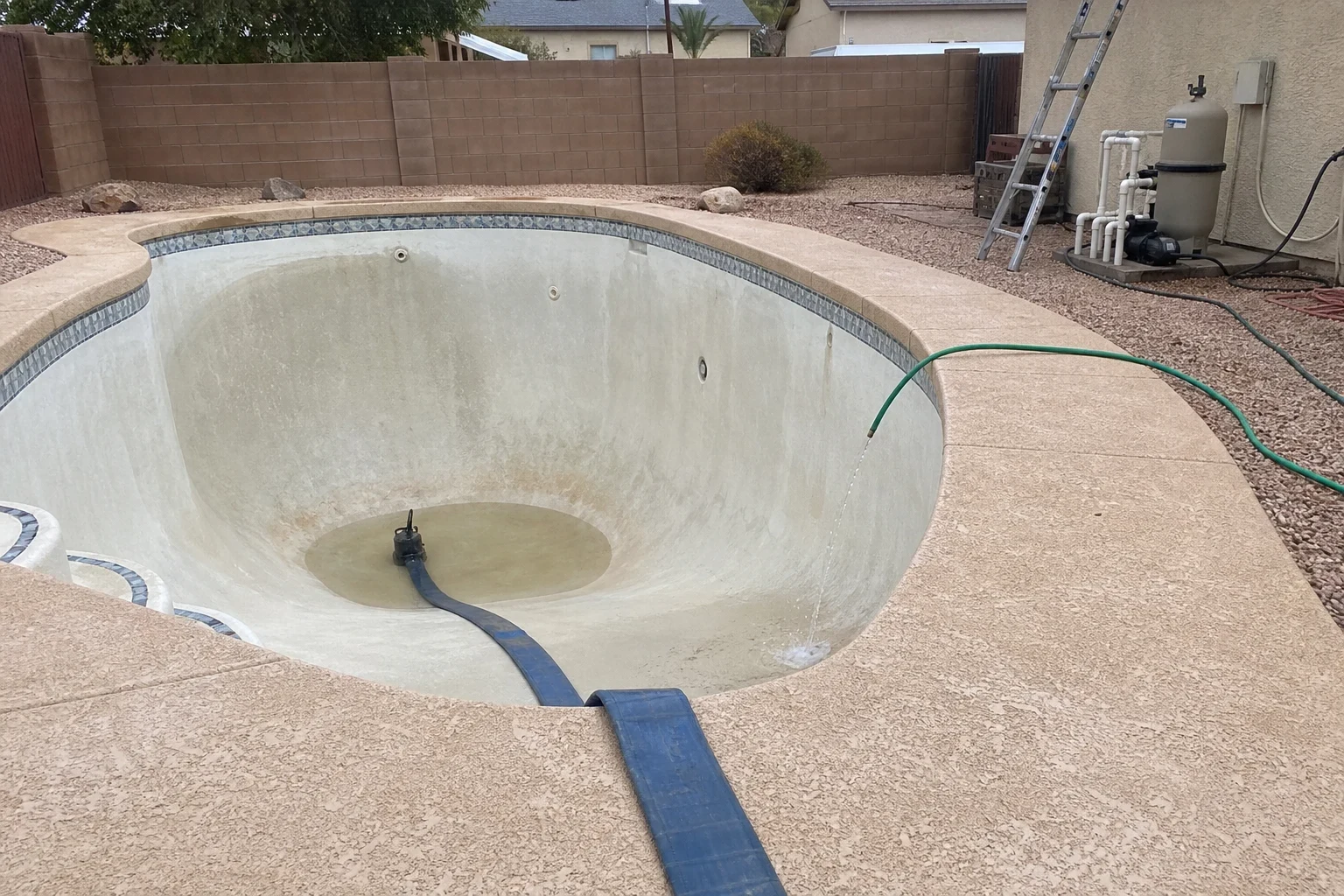
Pool water wears out. Minerals, stabilizer and dissolved solids build up until chemicals stop doing their job. We drain your pool with care, look after the surface while it is empty and refill it with fresh water, balanced from the start and timed for a season that is kind to your finish.
When fresh water does more than added chemicals
Evaporation takes water out of a pool but leaves everything dissolved in it behind. Each top-off adds more calcium from hard tap water, and stabilized chlorine tablets keep adding cyanuric acid. After a few years the water can test close to balanced and still look dull, scale the tile and need more chlorine every week. At that stage, a drain and refill resets the water more effectively than adding more product.
Timing matters as much as the work. Around Gold Canyon we prefer to drain in the cooler months, when an empty shell is not baking in summer sun and new water is not losing chlorine to heat while it settles. A fall or late-winter refill means your pool starts swim season with clean, stable water instead of fighting it.
If the surface needs attention, the empty pool is the right moment for an acid wash or calcium removal and tile cleaning, so you only drain once.
What a drain and refill includes
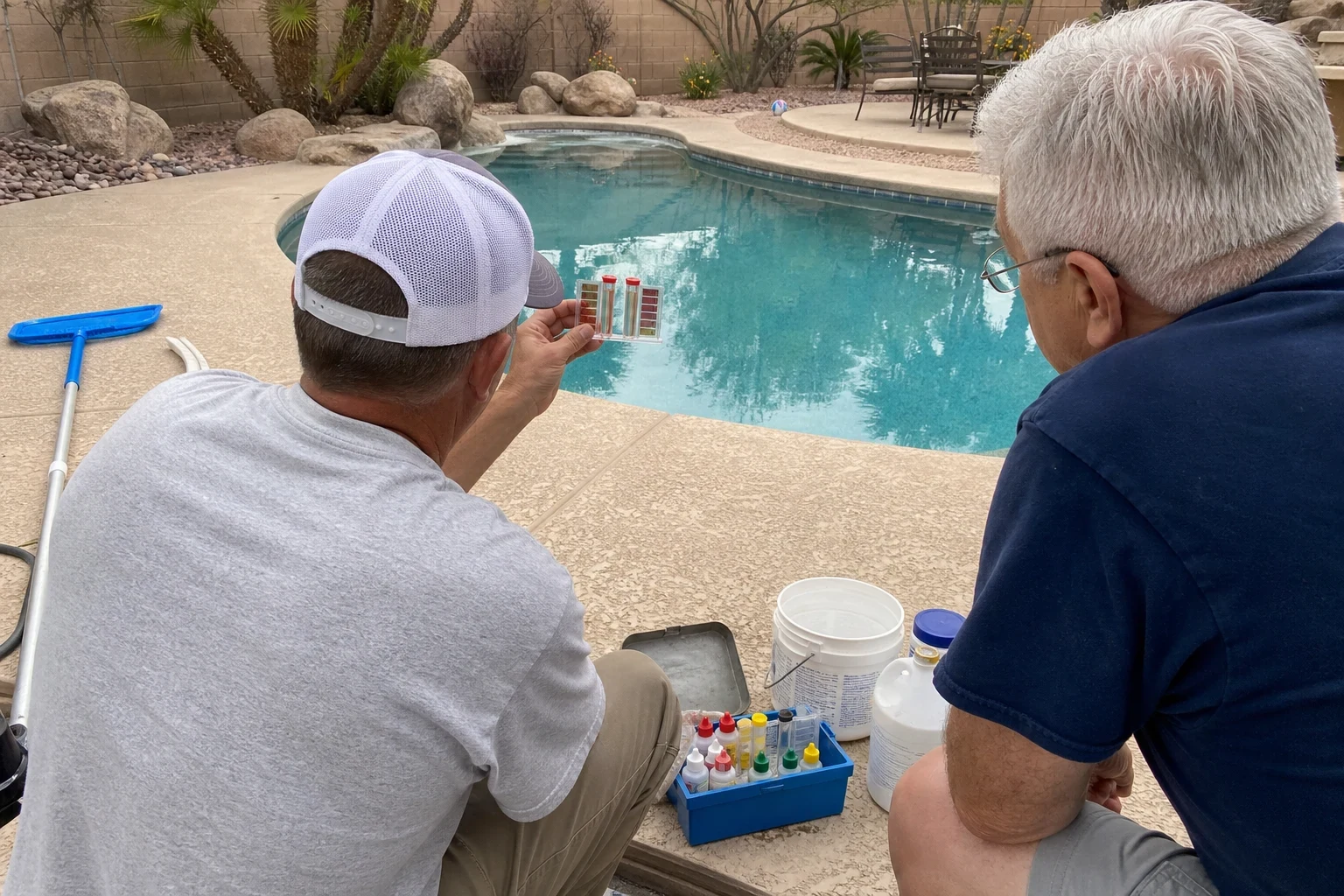
Testing before we drain
We test total dissolved solids, calcium hardness and cyanuric acid so the decision rests on numbers. If a partial drain will bring levels down far enough, we tell you.
Controlled discharge
A submersible pump moves the water to an outlet local rules allow, typically the sewer cleanout on your property rather than the street. We let high chlorine levels drop before discharge begins.
Care for the empty shell
An in-ground shell is held in place partly by the weight of its water. We check the hydrostatic relief valve in the main drain and keep the pool empty no longer than the work requires.
Surface inspection with photos
With the water gone, we look over the plaster or pebble finish, the tile line, lights and fittings. Anything worth your attention gets photographed so you can see it yourself.
A steady, gentle refill
We fill continuously, without stopping partway, which helps prevent a ring line on the finish. Hoses are set so water lands softly instead of scouring the floor.
Start-up balance
Once the pool is full, we prime the pump, restart the equipment and balance the new water from scratch, adding stabilizer and adjusting calcium with care.
Signs your pool water is due for a change
- Chlorine that will not hold
- You add more every week and readings still fall. High cyanuric acid from tablets is often the cause, and dilution is the only practical way to bring it down.
- White crust that returns quickly
- Scale comes back on the tile line within weeks of cleaning. The water is carrying more calcium than it can hold.
- Cloudy water with decent readings
- When pH and chlorine look fine but the water stays hazy, dissolved solids are usually the reason.
- Years since the last fresh fill
- Pools filled with hard water need fresh water every few years. If you cannot remember the last time, a test will tell us.
- A green pool with heavy water
- Green to clean recovery in place is often the right answer. When the water is also overloaded with minerals and stabilizer, draining can be the faster route, and we will tell you plainly which fits.
- Repairs planned below the waterline
- Some pool repair work needs an empty pool. Pairing it with a refill keeps the work to one visit.
How a drain and refill day runs
- 1
Test and schedule
We test the water, measure the pool and agree on a date, ideally during a mild stretch of weather. You will know ahead of time how long the pool will sit empty.
- 2
Drain with the equipment off
We switch off the pool equipment at the breaker so the pump cannot run dry, then set the submersible pump and route hoses neatly across the yard to the approved outlet.
- 3
Rinse and inspect
We rinse the shell, clear debris from the main drain and steps and look over the finish. Any add-on work, such as an acid wash, happens now.
- 4
Refill without a pause
The fill runs until water reaches the middle of the tile line. Depending on your water pressure, that can take most of a day or run overnight, and we arrange our return with you.
- 5
Restart and balance
We prime the pump, check the filter, restart the system and bring the chemistry into range. A follow-up test confirms the water has settled where it should.
What shapes the cost of a drain and refill
We quote each pool after learning about it, and your quote by phone is free. Most of the price comes from pump time, any work done while the pool is empty and what the new water needs to start balanced. The water itself appears on your own utility bill.
- Pool size and depth
- More gallons mean longer pumping, a longer fill and more start-up chemicals.
- Access and discharge route
- A long hose run, a gate that limits equipment or a cleanout that is hard to reach adds time to the job.
- Condition of the finish
- If the surface needs an acid wash, calcium removal or a small repair while empty, that work is quoted alongside the drain.
- Start-up chemistry
- Fill water varies, and some pools need more stabilizer or calcium adjustment than others to reach a stable balance.
- Season
- A mild-weather date is usually simpler. Draining in summer heat calls for extra steps to keep the surface wet and can stretch the job.
Drain and refill questions
- How long will my pool be empty?
- Usually only for the time it takes to rinse and inspect, often part of a day. Draining and refilling together typically run one to two days, depending on pool size and your water pressure. Adding an acid wash extends the empty time somewhat.
- Can you drain my pool in the summer?
- We can, though we usually suggest waiting for cooler weather. A bare plaster or pebble surface in direct summer sun can dry out and stress, and fresh water loses chlorine quickly in heat. If the water truly cannot wait, we start early and keep the surface wet throughout.
- Could draining damage my pool?
- Handled with care, it should not. The main risk is groundwater pressure pushing on an empty shell, which is why we check the hydrostatic relief valve and keep empty time short. We also make sure the equipment is off so nothing runs dry.
- Where does the drained water go?
- We discharge where local rules allow, which usually means the sewer cleanout on your property. We let chlorine drop first and keep hoses tidy so your yard is not flooded.
- Is a partial drain ever enough?
- Yes. If testing shows levels only slightly high, replacing part of the water can bring them into range for less cost and less water. We will recommend the smaller job when it does the work.
- How do I keep the new water in good shape?
- Regular care keeps fresh water fresh much longer. Our weekly pool cleaning has chemicals included in the monthly price, and new customers get a free first month of weekly service.
Start the season with fresh water
Tell us about your pool and when you would like the work done. We will talk through timing and whether a full or partial drain makes sense for your home.